 (208) 991-3502
 Meridian, ID






 January 6, 2026
Choosing between wired and wireless smart lighting can impact reliability, performance, and long-term satisfaction. Learn how Treasure Valley homeowners decide which lighting system fits their home best.
When homeowners start planning smart lighting, one of the most important decisions they face is how the system is built. Should lighting be wired into the home, or rely on wireless communication?
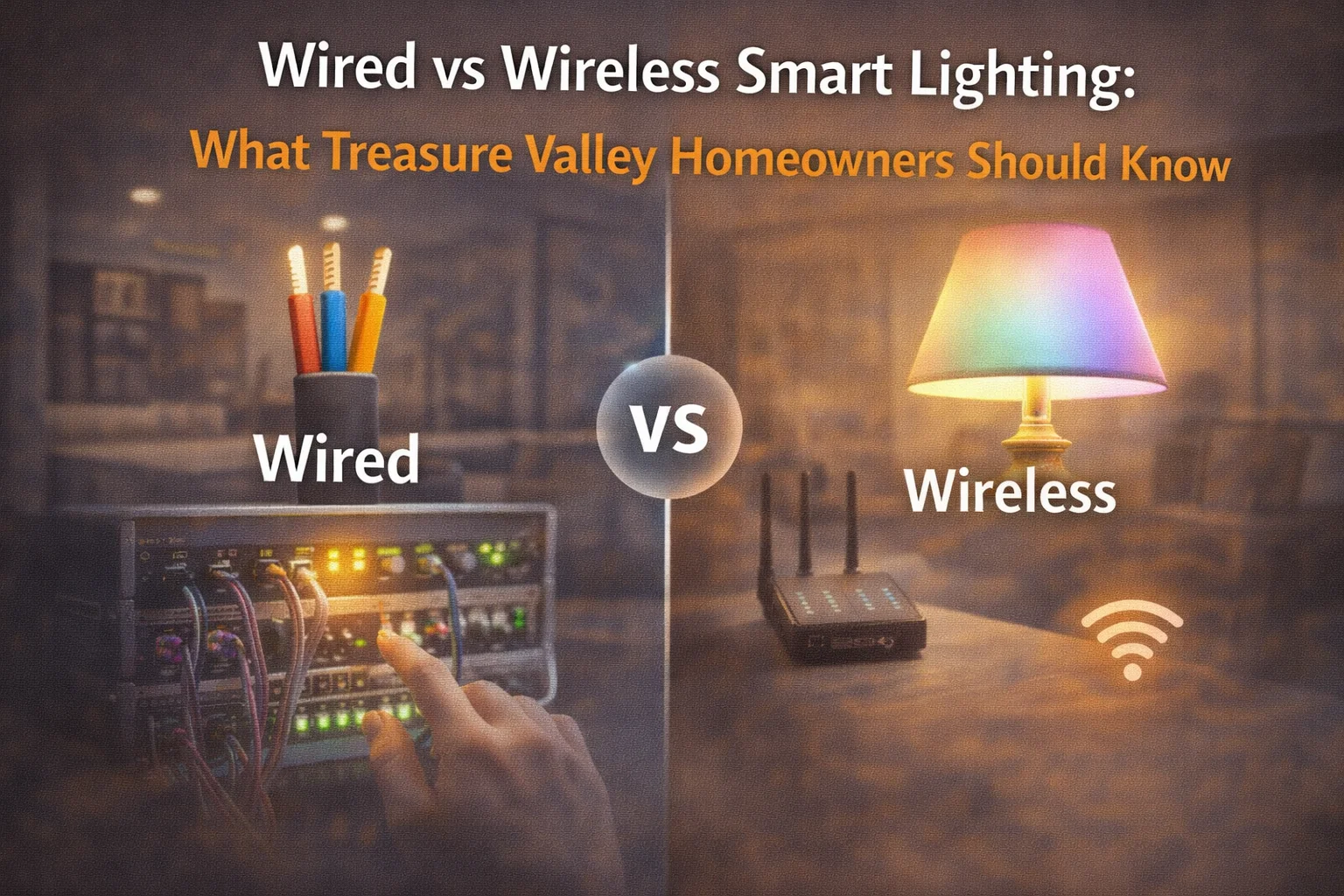
Both wired and wireless smart lighting systems can deliver automation and convenience—but they perform very differently over time. Understanding these differences helps Treasure Valley homeowners choose a solution that fits their home, lifestyle, and long-term expectations.
This guide explains how wired and wireless smart lighting compare, without technical jargon.
What Is Wireless Smart Lighting?
Wireless smart lighting systems rely on radio signals (Wi-Fi, Zigbee, Z-Wave, or similar protocols) to communicate between switches, bulbs, and controllers.
They’re often appealing because:
Installation is faster
Less wiring work is required
They work well for small upgrades
Wireless systems are commonly used in retrofits, apartments, or limited-scope projects where opening walls isn’t practical.
What Is Wired Smart Lighting?
Wired smart lighting systems use low-voltage wiring to connect switches, keypads, and controllers to a central system.
Instead of relying entirely on wireless signals, these systems communicate through physical connections—making them extremely stable and consistent.
Wired lighting control is most often used in:
New construction
Major remodels
Whole-home automation projects
Many homeowners explore wired systems while researching long-term technology options available through
👉 https://treasurevalleysolutions.com/services/
Reliability: The Biggest Difference
Reliability is where wired systems clearly stand out.
Wireless systems depend on:
Signal strength
Network congestion
Device batteries (in some cases)
As homes add more devices, wireless traffic increases. This can lead to delays, missed commands, or inconsistent behavior.
Wired smart lighting systems avoid these issues. Because communication happens through dedicated wiring, lights respond instantly and predictably—every time.
For homeowners who value consistency, this reliability becomes a deciding factor.
Performance in Larger Treasure Valley Homes
Many Treasure Valley homes feature:
Open floor plans
Multiple lighting zones
Indoor and outdoor lighting
Wireless systems can work well in smaller spaces, but as the number of controlled lights grows, complexity increases.
Wired systems are designed to scale. Whether controlling ten lights or hundreds, performance remains stable because the system isn’t competing for wireless bandwidth.
This scalability is especially valuable for homeowners planning future automation expansion.
Everyday Use: How the Systems Feel
Wireless systems often rely heavily on apps and voice assistants. While convenient, this can become frustrating for daily use—especially for guests or family members who just want lights to work naturally.
Wired smart lighting systems prioritize:
Wall keypads
Scene buttons
Intuitive controls
Apps and voice control still exist, but they’re optional—not required—for everyday interaction.
This design makes wired systems feel more like a natural extension of the home rather than a gadget.
Installation Considerations
Wireless systems:
Install faster
Require minimal wiring
Are ideal for single-room upgrades
Wired systems:
Require planning and wiring
Are easiest during construction or renovation
Deliver cleaner, long-term results
For homeowners thinking beyond short-term convenience, wired lighting often provides better long-term satisfaction.
Many Treasure Valley homeowners factor this into broader planning strategies outlined within
👉 https://treasurevalleysolutions.com/solutions/homeowner-solutions/
Cost: Upfront vs Long-Term Value
Wireless systems usually cost less upfront, especially for small installations. However, as systems expand, costs increase and maintenance becomes more complex.
Wired systems typically involve higher initial investment but:
Require less troubleshooting
Scale more easily
Last longer
Feel more polished day-to-day
For whole-home smart lighting, many homeowners find wired systems deliver better value over time.
Frequently Asked Questions
Is wired smart lighting better than wireless?
Not always. Wired systems excel in reliability and scalability, while wireless systems work well for smaller or simpler projects.
Can wireless lighting be reliable?
Yes, especially for limited use. Reliability challenges usually appear as systems grow.
Is wired lighting only for new homes?
No, but it’s easiest during construction or remodeling.
Can systems be mixed?
In some cases, yes—but professional design is important to avoid complexity.
Which option is better long-term?
For whole-home lighting, wired systems typically offer better long-term performance.
Choosing the Right Lighting System for Your Home
There’s no one-size-fits-all answer when it comes to wired vs wireless smart lighting. The right choice depends on home size, future plans, and how important reliability is to your daily life.
For Treasure Valley homeowners who want lighting that simply works—day after day—understanding this distinction helps ensure the system you choose delivers lasting value.