 (208) 991-3502
 Meridian, ID






 January 5, 2026
Smart lighting scenes automate multiple lights at once, creating consistent comfort without constant adjustments. Learn how lighting scenes work and why Treasure Valley homeowners rely on them every day.
Smart lighting isn’t just about turning lights on and off with an app. One of the most powerful — and most appreciated — features of a professionally designed lighting system is the use of lighting scenes.
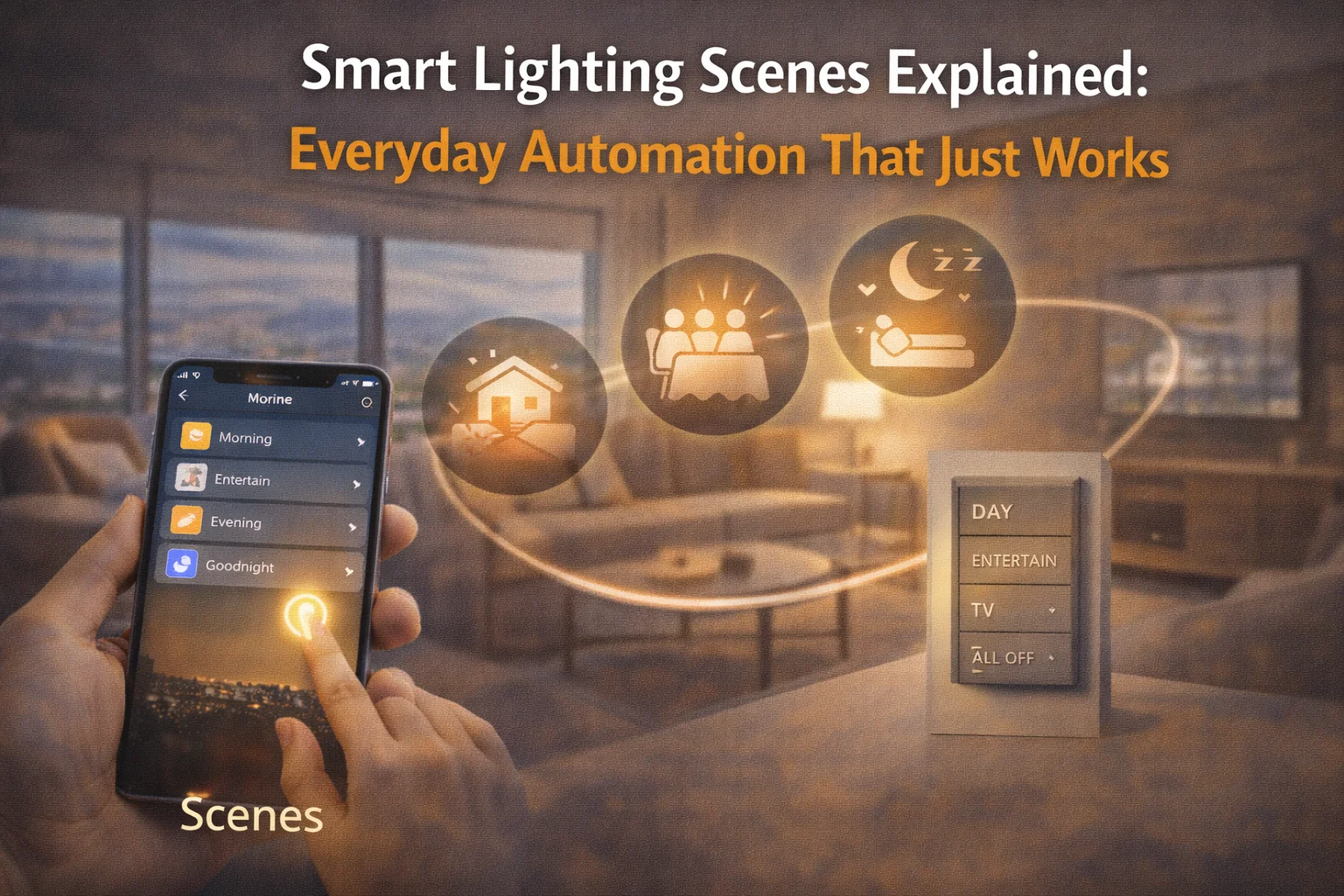
Lighting scenes allow multiple lights to respond together automatically, creating consistent, comfortable environments throughout the day. For Treasure Valley homeowners, scenes are often the moment when smart lighting stops feeling like technology and starts feeling like convenience.
This guide explains what lighting scenes are, how they work, and why they quietly improve everyday life.
What Is a Smart Lighting Scene?
A lighting scene is a preset combination of lighting settings that activates multiple lights at once.
Instead of adjusting each light individually, a single scene:
Turns specific lights on or off
Sets brightness levels
Coordinates multiple rooms if needed
Scenes can be activated by:
A button or wall keypad
A schedule
Motion or occupancy
A voice command
A single tap in an app
The result is lighting that responds instantly and consistently.
Why Scenes Matter More Than Individual Controls
Without scenes, even smart lighting can feel tedious. Managing multiple lights individually — even through an app — still requires attention and effort.
Scenes remove that friction.
With one action, an entire space responds the way it should. Lights adjust together instead of competing with each other, and homeowners don’t need to think about what to turn on or off.
This simplicity is why many homeowners exploring broader home technology options through
👉 https://treasurevalleysolutions.com/services/
quickly gravitate toward scene-based lighting.
Common Smart Lighting Scenes Treasure Valley Homeowners Use
Lighting scenes are designed around how people live, not how technology works. Some of the most common scenes include:
Morning
Lights gradually brighten to help ease into the day, often coordinating with natural daylight.
Daytime
Minimal lighting supplements natural light without over-illuminating rooms.
Evening
Lights soften and dim to create a comfortable, relaxed environment.
Away
Lights turn off or follow patterns that make the home appear occupied.
Night
Low-level lighting activates for safe movement without harsh brightness.
These scenes run automatically, creating consistency without daily input.
Scenes Improve Comfort Without Constant Adjustments
One of the biggest benefits of lighting scenes is consistency.
Rather than reacting to lighting conditions after they become uncomfortable, scenes adjust lighting proactively. Rooms always feel appropriately lit for the time of day, activity, or occupancy.
In Treasure Valley homes with open floor plans, this coordination is especially valuable. Lighting stays balanced across connected spaces instead of creating harsh contrast or dark zones.
Lighting Scenes and Energy Efficiency
Scenes also support energy efficiency.
Because lights are grouped and automated, scenes:
Prevent unnecessary lights from staying on
Use dimming instead of full brightness
Coordinate lighting with occupancy
These small efficiencies add up over time, especially in homes with many lighting zones.
Homeowners planning long-term efficiency strategies often consider lighting scenes as part of broader approaches outlined within
👉 https://treasurevalleysolutions.com/solutions/homeowner-solutions/
Scenes Work Best When Professionally Designed
While some DIY systems allow basic scenes, professionally designed lighting systems offer far more reliability and flexibility.
Professional design ensures:
Scenes feel intuitive
Lighting transitions are smooth
Wall controls remain natural
Systems scale easily over time
Poorly designed scenes can feel confusing or go unused. Thoughtful planning turns scenes into a feature homeowners rely on daily.
Frequently Asked Questions
Do I need smart lighting scenes to use smart lighting?
No, but scenes dramatically improve usability and comfort.
Can scenes be customized?
Yes. Scenes are tailored to homeowner preferences and routines.
Do scenes work automatically?
They can. Scenes often run on schedules or triggers without manual input.
Are lighting scenes hard to use?
No. Most homeowners find scenes easier than managing individual lights.
Can scenes include other systems?
Yes. Lighting scenes can coordinate with shades, thermostats, and more.
When Lighting Just Works, You Stop Thinking About It
Smart lighting scenes are one of those features homeowners don’t fully appreciate until they experience them. Once lighting adjusts automatically — consistently and quietly — it becomes hard to imagine living without it.
For Treasure Valley homeowners, lighting scenes turn smart lighting into a natural part of daily life. No constant adjustments. No complicated controls. Just lighting that works the way it should.